
Interview: Club Car’s Fabio Vigo on the vision for commercial EVs
Fabio Vigo is the new Club Car EMEA street legal vehicles business development lead, having spent 18 years at Piaggio Group developing the iconic Vespa and the brand’s commercial vehicles.
He sat down for an exclusive interview with Fleet World to discuss his plans to continue Club Car’s expansion from legendary golf cart manufacturer into the commercial light vehicle sector.

Fabio Vigo brings 18 years of experience at Piaggio Group
Q: What attracted you to Club Car and this opportunity?
Fabio: Club Car has a reputation built on quality, innovation and reliability. It’s a brand with deep roots and recognition in golf, but it’s also been laying the groundwork in the commercial EV sector for the last few years. The opportunity to help accelerate that transition was incredibly exciting. It’s not often you get to work with a brand that combines decades of trust with such untapped commercial potential.
Club Car has been a pioneer since the 1960s and it is still pioneering new products and concepts. It’s challenging existing brands in the sector by offering something fresh and new.
Q: What’s your vision for growing Club Car Urban in EMEA, given that Club Car is a household name in golf, but perhaps less so in the commercial EV space?
Fabio: Club Car has been a pioneer in golf since the 1960s, and now the goal is to replicate the brand loyalty we see in golf by building strategic relationships across key commercial sectors. That means identifying real-world use cases—whether it’s municipalities, last-mile delivery, or facilities management – and demonstrating how the Urban range can outperform legacy solutions in terms of cost-efficiency, sustainability ergonomics and safety. Education, awareness and proof of concept will be central to this journey.
Q: Which sectors offer the biggest opportunities for Club Car Urban?
I would describe Urban as the perfect missing link in the commercial vehicle market because it combines versatility, build quality and road-legal readiness. It’s a very attractive mobility solution with a unique value proposition for a wide variety of sectors, including logistics, maintenance and gardening, factories, municipalities and public administration and last-mile delivery. Many of these sectors already understand the benefits of low-speed, zero-emission vehicles but need solutions that are street-legal and fleet-manageable. There are opportunities in tourism and hospitality, especially in historic or low-emission zones where conventional vehicles aren’t practical.
I also see a huge opportunity to create a new sector, moving people and goods from logistics to delivery – so from the warehouse to the delivery trucks. The fact Urban is road-legal is a huge advantage for the movement of people and goods in and around factories and warehouses.
Q: What’s your number one priority in your new role?
My strategy always to analyse, plan and execute. Over the course of the first few months I’ll be travelling around Europe, meeting our dealers, finding out we are at our core and getting to know the people to whom we sell our commercial vehicles.
Q: How are customer expectations changing when it comes to urban mobility and commercial transport solutions?
Speed, sustainability and simplicity. Operators want reliable, electric-first solutions that reduce operating costs, integrate with digital tools and meet emissions regulations. There’s a growing expectation for vehicles to be ‘smart’ – not just electric, but also connected and efficient from a fleet management perspective.
Q: What gives Club Car Urban a competitive edge in the increasingly crowded electric vehicle market?
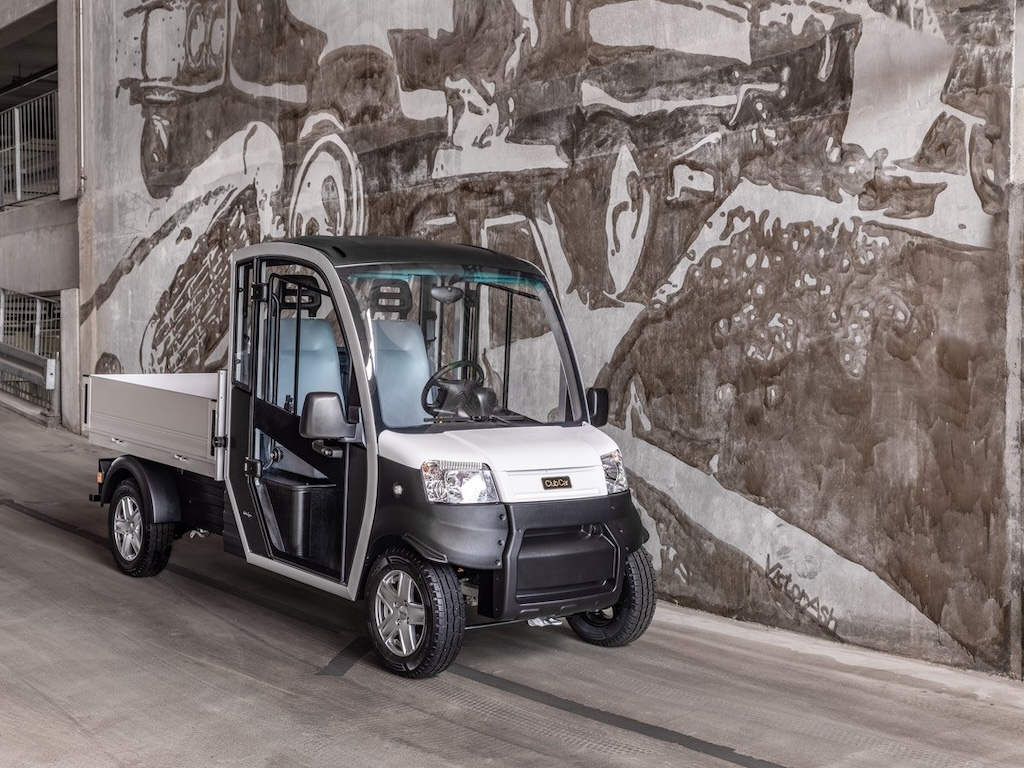
Club Car Urban
The product itself is excellent. Having worked for Piaggio for 18 years, I know when a product is technically very good. It’s the safest option in its sector – the only vehicle of its kind to go through stringent crash testing – it is incredibly efficient and its ergonomics are in my opinion unrivalled.
Combining this with Club Car’s legacy of vehicle reliability and our global service network gives us a very strong foundation. We’ve been building innovative electric vehicles for decades; now we’re ready to deliver versatile street-legal solutions in a changing world where the mobility of people, businesses and cities is evolving.
Q: Sustainability is a huge driver of innovation in transport. How does Club Car’s Urban range contribute to greener logistics and city mobility?
Club Car Urban range is designed specifically for last-mile and low-speed urban environments, where internal combustion engines are inefficient and increasingly unwelcome. By replacing diesel vans with purpose-built electric alternatives, we reduce noise, emissions and operating costs – all of which are key to sustainable city living.
Q: Looking ahead, what does success look like for you and Club Car Urban over the next 12-18 months?
Success means getting more Urban vehicles on the road in real-world applications – and using those deployments to tell stories of innovation, savings and sustainability. We want to earn the same level of awareness and reputation as we have in golf: a brand that’s trusted, respected and synonymous with quality.
To find out more about Club Car Urban, visit: www.clubcarurban.com
Contributor

The author didn't add any Information to his profile yet.