
AI reduces crash rates by 75% across fleets
A new report showing a major step-change in operations performance among AI-enabled fleets is now out.
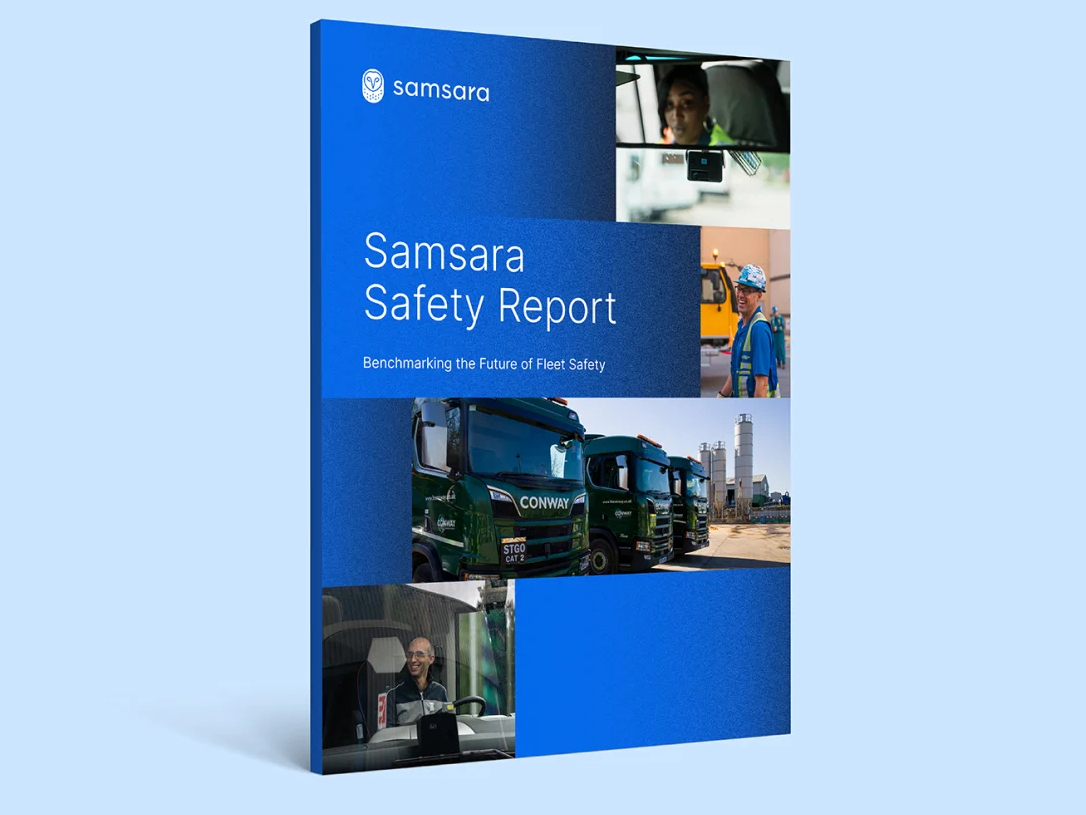
Fleets implementing the full Samsara AI safety solution as a whole see around a 75% reduction in crash rates
The first-ever Samsara Safety Report reveals that fleets implementing the full Samsara AI safety solution – including dual-facing AI dashcams, automated in-cab alerts and AI driver coaching – as a whole see around a 75% reduction in crash rates over 30 months.
The report, which analysed data from more than 2,600 fleets across North America, the UK, Western Europe and Mexico, benchmarks key safety outcomes – including crash rates, harsh events, speeding and mobile usage. The research was carried out across a 30-month time frame to understand how AI, real-time visibility and coaching improve real-world fleet performance.
The results reinforce how AI-enabled tech is revolutionising fleet safety by improving crash rates and risky behaviours.
Johan Land, SVP of product and engineering, safety & AI at Samsara, said: “The next chapter of road safety is fundamentally being written with AI. These findings confirm that AI will be the most transformative technology we’ve seen for road safety, actively preventing crashes at scale. Dual-facing cameras give fleets full visibility into what’s happening inside and outside the cab, and when that intelligence is paired with real-time alerts and automated coaching, the results are extraordinary.”
The analysis also shows that fleet safety improvements occur quickly and compound over time. Within the first six months on Samsara, fleets in aggregate saw a 48% decrease in harsh events and an 84% decrease in mobile usage; by month 30, those reductions reached 69% and 96% respectively, underscoring how intelligent feedback and visibility can reduce risk and prevent crashes before they happen.
Fleets using Samsara’s complete AI safety solution achieve the greatest impact. Customers adopting Samsara typically experience a 35-40% aggregate reduction in crashes over time; however, fleets with 175+ vehicles that implement the full AI safety solution – including dual-facing AI dashcams, in-cab alerts and AI coaching – see a 73% decrease over 30 months.
The data also reveals that dual-facing dash cams are more than twice as effective. When isolating safety improvements by camera type, customers who implement dual-facing dash cams see an aggregate reduction in crash rate two times greater than customers who implement front-facing dash cams alone. Dual-facing dash cams provide full visibility into both what’s happening on the road and how the driver is behaving, making it possible to alert drivers to risky behaviours such as drowsiness and mobile usage.
Beyond fleet-level outcomes, the report highlights regional and industry patterns that detail how geography, infrastructure and enforcement shape risk. Canada records the lowest crash rates globally (-9%) but higher-than-baseline speeding (+38%), while Western Europe reports the lowest speeding (-61%) and the highest rate of harsh events (+65%). Mexico shows the highest mobile phone usage (+238%) and crash rate (+60%), suggesting distracted driving remains a leading risk factor in the region.
The full Samsara Safety Report is available here.
Natalie Middleton

Natalie has worked as a fleet journalist for nearly 20 years, previously as assistant editor on the former Company Car magazine before joining Fleet World in 2006. Prior to this, she worked on a range of B2B titles, including Insurance Age and Insurance Day. Natalie edits all the Fleet World websites and newsletters, and loves to hear about any latest industry news - or gossip.