
Global push for ‘repair-first’ car designs to slash soaring everyday crash costs
The world’s leading motor insurance research institutes have joined forces to push for a radical overhaul in how vehicles are engineered, aiming to reverse the soaring costs of fixing everyday collisions.
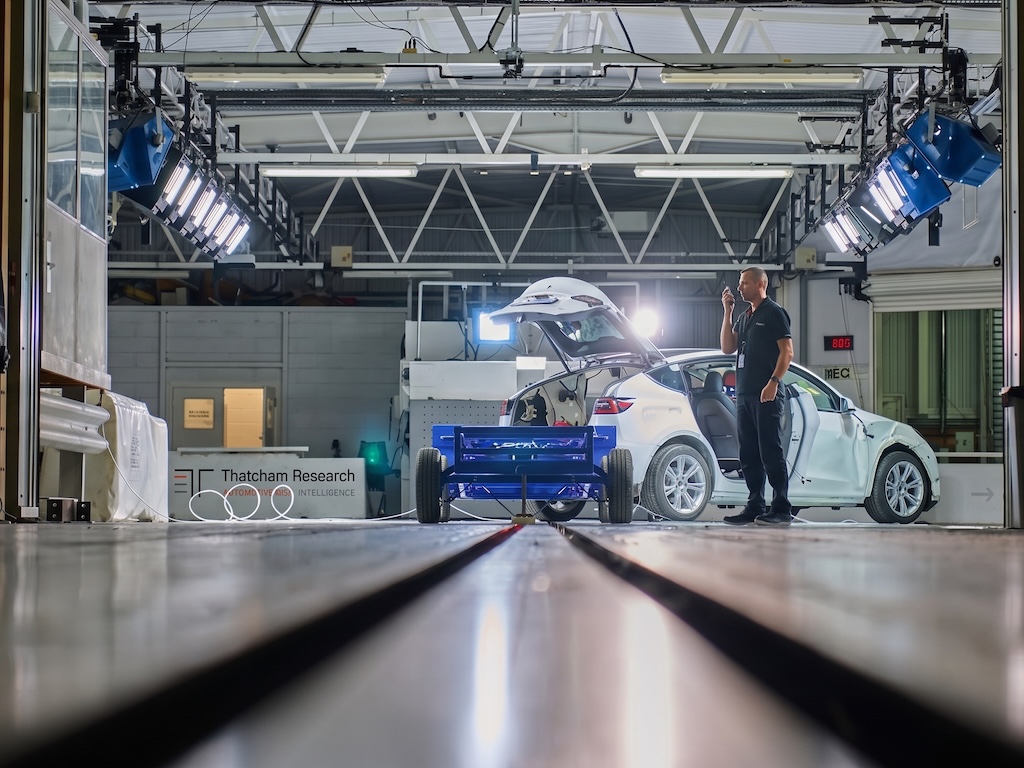
Motor insurance institutes want repairability to be designed in from day one, along with wider adoption of low-speed emergency braking
Representatives from 19 research institutes across 15 countries gathered in Mexico City for the annual Research Council for Automobile Repairs (RCAR) conference with a shared goal to get insurers and carmakers working together to slash everyday repair costs and keep motoring affordable.
The organisations – which include the UK’s Thatcham Research – want repairability to be designed in from day one, along with wider adoption of low-speed emergency braking, as they warn that rising claims costs are a global challenge.
There are now more than 1.4 billion passenger cars on the road worldwide, and the World Health Organization estimates that road traffic crashes cost around 3% of global GDP. Vehicle damage and repair costs from everyday low-speed crashes are a major part of that picture, driven to a considerable extent by vehicle design and increasingly complex technologies.
In the UK, insurers paid out £2.9bn in motor claims over the first quarter of 2026 – including £1.9bn for vehicle repairs, up 3% on the previous quarter. Increasingly complex car designs have driven the average UK accidental damage claim up to a staggering £3,699, according to the Association of British Insurers.
Jonathan Hewett, chief executive, Thatcham Research, said: “Most drivers will never be involved in a high-speed crash, but almost all of us will at some point have a scrape in a car park, a nudge at a junction or a clip on a roundabout. Those everyday incidents account for a very large share of what insurers pay out, and how much each one costs depends to a great extent on how the vehicle was designed.”
A central focus of the RCAR conference was how closer cooperation between insurers and vehicle manufacturers can reduce both the frequency and cost of claims.
The international coalition emphasises three clear opportunities to achieve this: vehicle design, driver assistance systems and repair methods.
For vehicle design, RCAR’s institutes are calling for crash performance to be optimised and repairability considered systematically at an early stage of vehicle development. Stakeholders emphasised that RCAR low-speed crash tests are now an established global standard for reducing damage in typical parking and rear-end collisions, and dedicated procedures have been developed to analyse and prevent underbody damage to high-voltage batteries in electric vehicles.
In terms of driver assistance systems, the sector highlighted that such technology has major potential to reduce parking damage, which continues to account for a substantial share of total claims. Broad deployment of automatic emergency braking for close-range manoeuvring (Parking AEB) could reduce collision damage claims worldwide by up to 15%.
Finally, industry leaders want a focus on a ‘repair before replace’ ethos. They warn that increasing vehicle complexity raises the bar for repairs that are both technically sound and economically efficient, necessitating transparent repair information, standardised procedures and highly skilled repairers. Wherever technically feasible, repair should take precedence over replacing parts, supported by repair-friendly vehicle design and the use of quality-assured recycled and aftermarket components.

RCAR members reaffirmed their commitment to intensifying dialogue with the automotive industry
At the conference, RCAR members reaffirmed their commitment to intensifying dialogue with the automotive industry, as data indicates manufacturers are responding.
A survey commissioned by Thatcham Research and conducted by the Centre for Economics and Business Research (CEBR) shows that 51% of vehicle manufacturers now rank repairability above traditional customer priorities.
That shift in priorities is beginning to show in the vehicles Thatcham Research assesses, with new vehicles sustaining less damage in the RCAR low-speed impact than a year ago.
Jonathan Hewett of Thatcham Research, welcomed the progress, adding: “The encouraging news is that manufacturers are listening.”
“But there is still a long way to go,” he continued. “Repair costs remain high and, while the average is moving in the right direction, the gap between the best and worst performers is still far too wide. When we replicate the same everyday low-speed RCAR collision in our test facility, one vehicle can take seven hours to repair while a comparable model needs 47. In another recent test, two family SUVs from the same market segment required vastly different levels of repair, with one needing 59 replacement parts following a low-speed RCAR impact and the other just 13.
“We are also seeing increasing levels of hidden damage that may not be apparent without dismantling the vehicle, adding cost, complexity and uncertainty to insurance claims. These are exactly the kinds of challenges that greater collaboration and knowledge sharing through RCAR can help the industry address.”
Research Council for Automobile Repairs (RCAR)Thatcham Research
Natalie Middleton

Natalie has worked as a fleet journalist for nearly 20 years, previously as assistant editor on the former Company Car magazine before joining Fleet World in 2006. Prior to this, she worked on a range of B2B titles, including Insurance Age and Insurance Day. Natalie edits all the Fleet World websites and newsletters, and loves to hear about any latest industry news - or gossip.