
BEVs and plug-in hybrids power growth in Europe’s new car market
Europe’s new car market recorded moderate growth in October, driven predominantly by battery electric vehicles and plug-in hybrids.
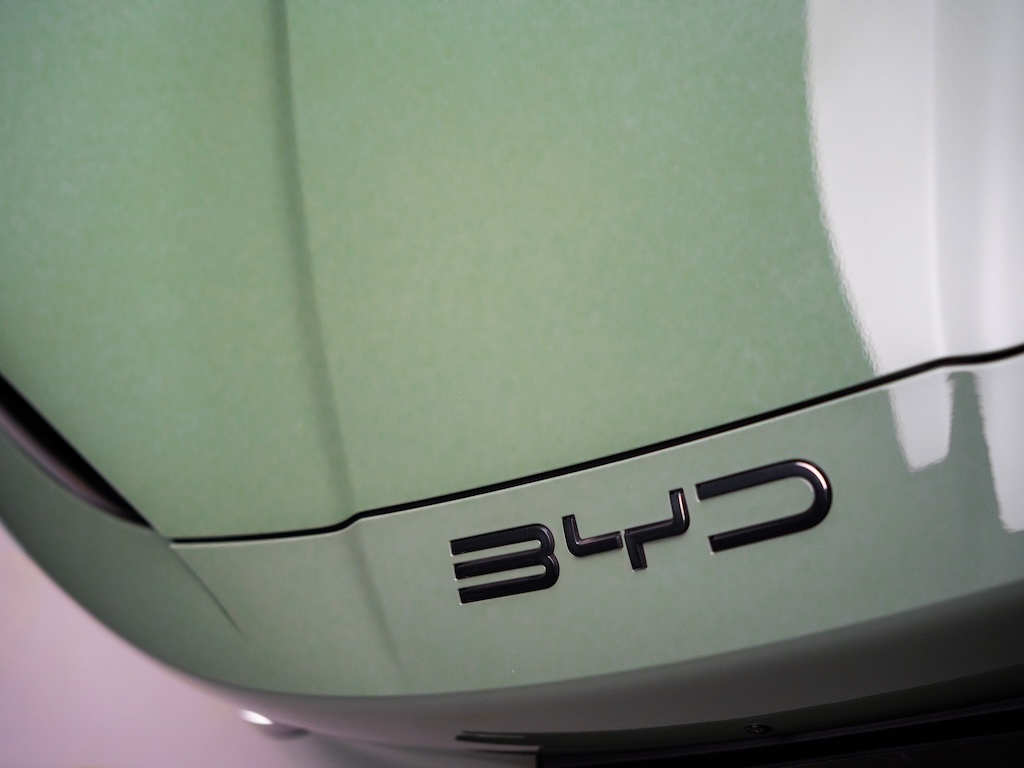
BYD continues to rapidly gain market share in Europe
Just over a million new cars (1,088,275) were registered across Europe-28 in October; up 4.8% year-on-year, according to latest Jato Dynamics data.
The highest-performing markets in terms of volume were Germany (+18,141 units, +7.8%), Spain (+13,260 units, +15.4%) and Poland (+4,645 units, +9.7%).
Demand for battery electric vehicles (BEVs) was up 33% year-on-year, reaching 224,351 units in October. This increased the powertrain’s share of the overall market to 20.6%; up 4.4 percentage points year-on-year.
Plug-in hybrid electric vehicles (PHEVs) were another driver of growth, with registrations increasing to 117,240 units; up 41% year-on-year. This brought the powertrain’s market share to 10.8% – a 2.8 percentage point increase compared to October 2024 and mostly driven by newcomers such as the BYD Seal U PHEV (+5.476 units) and Jaecoo 7 PHEV (+3.804 units).
In contrast, registrations of internal combustion engine (ICE) vehicles fell, with 348,794 units posted in October – a year-on-year decline of 17% that saw the powertrain’s monthly market share drop by 8.4 percentage points to 32.1%.
While the BEV sector saw the greatest year-on-year increase in market share, it remains the third best-selling powertrain behind internal combustion engine and mild hybrid electric vehicles – and more than 50% of the EU market still rely more conventional powertrain solution.
Daniele Ministeri, senior consultant at Jato Dynamics, said this was a “clear signal of consumer sentiment” that may influence the final decision in the EU’s plans to water down the 2035 petrol and diesel car ban.
A look at Jato’s league table for individual car brands reveals that BYD continues to rapidly gain market share in Europe. Year-to-date, the Chinese brand recorded the strongest market share growth of any brand rising to 1.3%, up 0.93 percentage points, supported by an additional 102,000 registrations compared to the same period in 2024.
But Volkswagen-owned Cupra continued its upward trend, reaching 2.2% market share (+0.57 percentage points). This is in part due to the success of new models – the Terramar and Tavascan – developed under the Cupra brand and replicating the success of the Formentor.
Meanwhile, Škoda also showed strong growth, with a year-to-date market share increase of 0.49 percentage points to 6.3%, mostly driven by the success of the Elroq and the new Kodiaq.
MG also performed well with registrations reaching close to 250,000 units, surpassing well-established mainstream brands including Nissan and Fiat.
Within the BEV segment, the Tesla Model Y remains the best-selling model year-to-date with almost 115,000 units, followed by the fast-growing Škoda Elroq – October’s best-selling BEV model with 11,441 units and almost 71,000 units year-to-date. The Renault 5 followed in second place in October’s ranking, with 9,539 units registered last month.
Jato also spotlighted that “despite all the rumours about a ‘Chinese BEV invasion’”, there are no pure Chinese brands in the year-to-date BEV top 10.
The automotive data specialist also drew attention to the year-to-date data for the fastest-growing Chinese or Chinese-owned OEMs in Europe, such as MG, Omoda or Jaecoo, which reveals that the share of pure BEVs is even lower than the market average.
“This clearly shows how these brands are leveraging both internal combustion and hybrid solutions to boost volumes, highlighting that Chinese competitiveness is not limited to pure-play electric vehicles. These brands are genuine challengers across other powertrains as well,” Ministeri pointed out.
Natalie Middleton

Natalie has worked as a fleet journalist for nearly 20 years, previously as assistant editor on the former Company Car magazine before joining Fleet World in 2006. Prior to this, she worked on a range of B2B titles, including Insurance Age and Insurance Day. Natalie edits all the Fleet World websites and newsletters, and loves to hear about any latest industry news - or gossip.