
Volvo reinvents seatbelt in world-first safety breakthrough
Volvo has reinvented the modern seatbelt with new world-first technology in a major safety breakthrough.
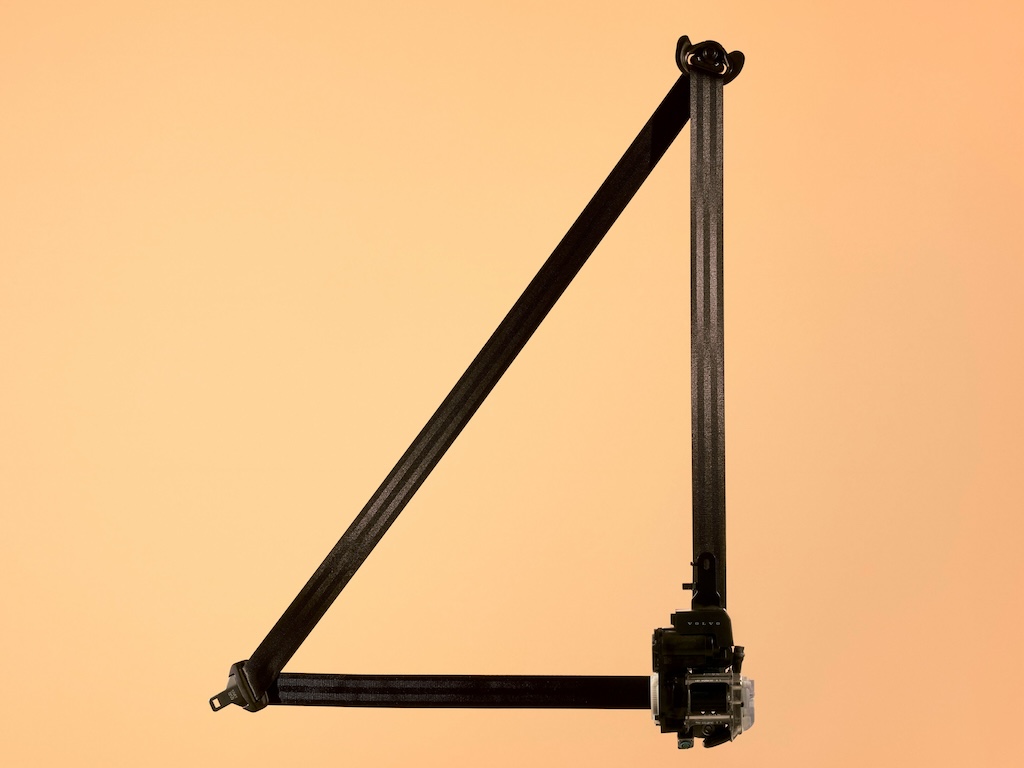
The new safety belt debuts in the upcoming fully electric Volvo EX60 in 2026
Debuting in the upcoming fully electric Volvo EX60 in 2026, the new safety belt uses multi-adaptive technology to better protect drivers and passengers.
Arriving almost 70 years since the Swedish carmaker first invented the seatbelt in 1959, the new multi-adaptive safety belt can use data input from interior and exterior sensors to customise protection, adapting the setting based on the situation and individual’s profiles, such as their height, weight, body shape and seating position.
Modern safety belts use load limiters to control how much force the safety belt applies on the human body during a crash. This new safety belt expands the load-limiting profiles from three to 11 and increases the possible number of settings, enabling it to optimise performance for each situation and individual.
As an example, in a serious crash it will adjust to a higher load setting for larger occupants to help reduce the risk of head injury, while smaller occupants in a milder crash will receive a lower belt load setting to reduce the risk of rib fractures.
Unlike traditional systems, the new multi-adaptive safety belt can utilise data from different sensors, including exterior, interior and crash sensors. In a split second, the car’s system analyses the unique characteristics of a crash – such as direction, speed, and passenger posture – and shares that information with the safety belt. Based on this data, the system selects the most appropriate setting.
It’s also designed to get better over time. The capabilities of the new multi-adaptive safety belt are designed to continuously improve via over-the-air software updates. As Volvo gathers more data and insights, the car can improve its understanding of the occupants, new scenarios and response strategies.
Åsa Haglund, head of Volvo Cars Safety Centre, said: “The world first multi-adaptive safety belt is another milestone for automotive safety and a great example of how we leverage real-time data with the ambition to help save millions of more lives.
“This marks a major upgrade to the modern three-point safety belt, a Volvo invention introduced in 1959, estimated to have saved over a million lives.”
The belt has been tested and further developed at the Volvo Cars Safety Centre crash lab, which celebrates its 25th anniversary this year.
The seatbelt safety milestone is part of Volvo’s broader safety ecosystem, working seamlessly with airbags, occupant detection and driver assistance systems. This cooperation provides harmonised protection features, enhances effectiveness and minimises the risk of subsequent injuries.
Natalie Middleton

Natalie has worked as a fleet journalist for nearly 20 years, previously as assistant editor on the former Company Car magazine before joining Fleet World in 2006. Prior to this, she worked on a range of B2B titles, including Insurance Age and Insurance Day. Natalie edits all the Fleet World websites and newsletters, and loves to hear about any latest industry news - or gossip.