
Britain proposes move to Euro 7 emissions standards
The British government has opened a consultation on updating the minimum emissions standard to Euro 7 in Britain.
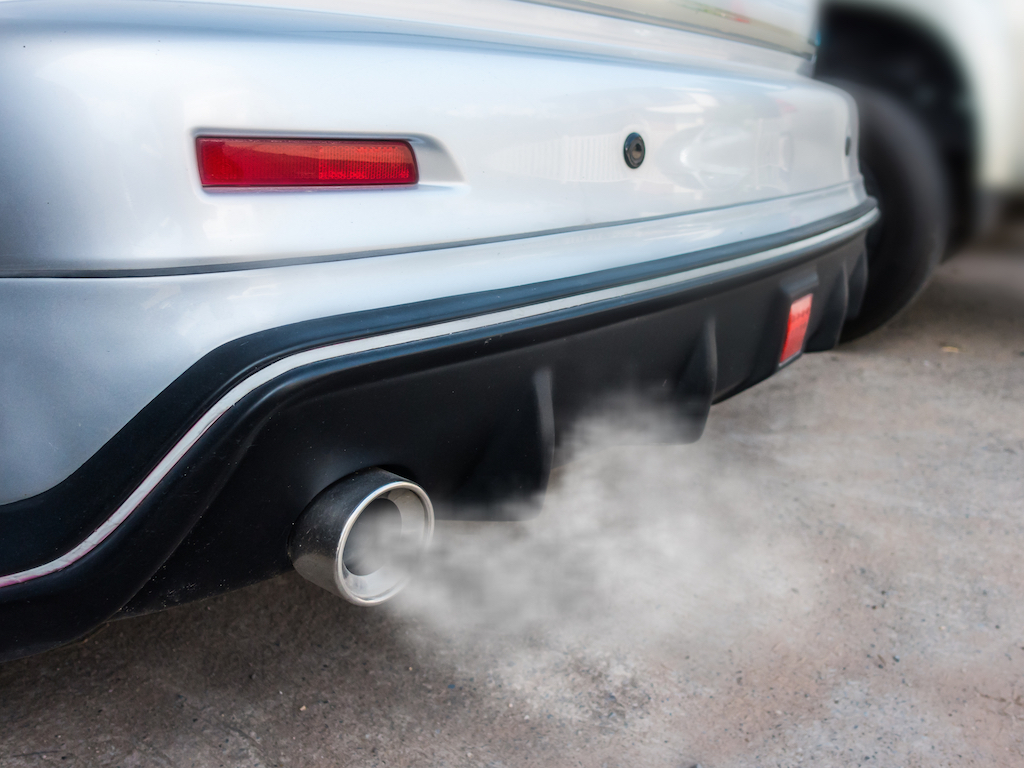
The DfT seeks feedback on aligning Britain’s new vehicle emission standards with Euro 7
The consultation, which closes at 11:45pm on 25 May 2026, seeks views on whether to implement the EU’s latest emission standard for cars, vans, trucks, buses and coaches.
It also seeks views on proposals to amend existing in-service conformity requirements applicable under the Euro 6 legislation in Britain.
The move would bring Britain in line with the EU, where the regulations will apply to new light-duty vehicle models from 29 November 2026 and to new heavy-duty vehicle models from 29 May 2028. The UK has helped develop this standard through the United Nations Economic Commission for Europe (UNECE).
In the UK, regulation (EC) No 715/2007 and its implementing regulation, Commission Regulation (EU) 2017/1151, set the current minimum emission standard for light-duty vehicles, known as Euro 6d. This includes the requirements for ISC testing.
On the heavy-duty vehicle side, regulation (EC) No 595/2009 and its implementing regulation, Commission Regulation (EU) No 582/2011, set the current minimum emission standard, known as Euro VI Step D.
In the EU, Regulation (EU) 2024/1257 has introduced the Euro 7 standard, which will replace the Euro 6e and Euro VI Step E standards. Euro 7 includes the changes introduced by Euro 6e and Euro VI Step E. Euro 6e and Euro VI Step E were introduced in the EU in 2023 and 2021, respectively.
Under the Windsor Framework, Northern Ireland applies the current EU standards, known as Euro 6e and Euro VI Step E for light and heavy-duty vehicles, respectively.
Euro 7 builds on the existing standards by strengthening current requirements and introducing several new requirements.
For all vehicles, PN limits are set at the PN10 scale, rather than PN23, ensuring smaller particles are regulated. Requirements on durability and lifetime compliance are extended to ensure emissions remain controlled over a longer lifespan.
For light-duty vehicles, other pollutant limits remain unchanged from Euro 6e.
For heavy-duty vehicles, a new limit for nitrous oxide is introduced and limits are reinforced for pollutants.
Euro 7 also introduces new requirements to limit PM emissions from brake wear and tyre abrasion, to help improve air quality.
On the electric vehicle side, battery durability requirements are introduced for EVs and PHEVs, including minimum capacity retention thresholds over defined mileage and time periods.
Euro 7 also requires vehicles to be fitted with accurate, accessible and comparable battery health monitors. This would support buyers of second-hand EVs by standardising the information supplied on the condition of batteries.
Thomas McLennan, director of policy and public affairs at the British Vehicle Rental and Leasing Association (BVRLA), said the consultation has the potential to put clear, comparable, and easily accessible battery health information in the hands of drivers and fleet operators.
“That clarity is critical in giving used EV buyers the confidence they need to make the market stable and sustainable.”
The new rules would also bring updates to plug-in hybrid electric vehicle CO2 emission figures.
The calculation method of official CO2 emission figures for plug-in hybrid electric vehicles (PHEVs) is updated in two stages. These updated calculations address a globally recognised gap between official and real-world emissions.
CO2 emissions from PHEVs are almost 2.5 times higher in real life than recorded in the testing cycle. In the UK, changes have been made to mitigate the effects on taxpayers and vehicle manufacturers of increasing the official PHEV CO2 figures due to new emission standards.
These changes will also mitigate the effect on manufacturers and taxpayers if Euro 7 is implemented in Great Britain.
The proposed changes would increase official PHEV CO2 emission figures, which could, in some situations, increase the Benefit-in-Kind (BiK) tax due on PHEV company cars. The Government said it recognises that while it is right that higher-emitting vehicles pay more tax, company cars play an important role in supporting our transition towards decarbonisation and zero emission vehicles.
The Department for Transport has introduced a BiK tax easement for PHEVs that will apply UK-wide retrospectively from January 2025 to April 2028. The tax easement aims to mitigate the impacts on users of PHEV company cars and their employers during this period. It would also apply to vehicles approved to the Euro 7 standard, should Euro 7 be implemented in Britain.
Flexibilities would also remain for manufacturers under the Vehicle Emissions Trading Schemes (VETS) Order; the UK legislation implementing the ZEV mandate and CO2 standards for new cars and vans.
The VETS Order includes a CO2 standard that limits CO2 emissions from non-zero emission cars or vans (non-ZEV), including PHEVs. The order has been amended to give manufacturers an option to use PHEV CO2 values calculated in line with Euro 6d for compliance with the non-ZEV scheme. The option would apply where that vehicle has been approved to the Euro 6e standard. The Government will ensure that this flexibility continues to apply to vehicles approved to the Euro 7 standard.
To implement Euro 7, amendments will need to be made to GB type approval regulations.
This would initially focus on implementing Euro 7’s light-duty vehicle requirements, as legislation to implement the heavy-duty vehicle requirements is still under development in the EU and at the UNECE.
As Euro 7 includes the changes of Euro 6e and Euro VI Step E, the Government isn’t proposing to mandate these sub-steps separately.
The consultation is online here.
Natalie Middleton

Natalie has worked as a fleet journalist for nearly 20 years, previously as assistant editor on the former Company Car magazine before joining Fleet World in 2006. Prior to this, she worked on a range of B2B titles, including Insurance Age and Insurance Day. Natalie edits all the Fleet World websites and newsletters, and loves to hear about any latest industry news - or gossip.