
Fleet of Toyota and BMW cars starts renewable fuel trials
Toyota and BMW, along with Bosch and Repsol, have launched a joint six-month real-world pilot project in Spain to test existing vehicles running exclusively on 100% renewable gasoline.
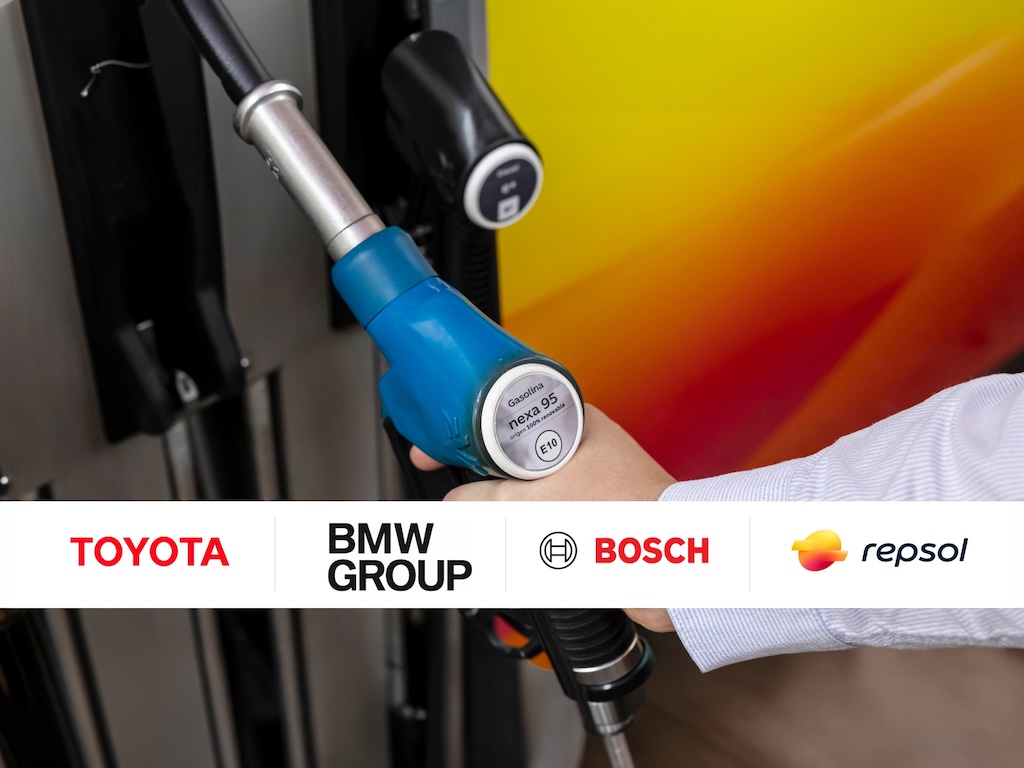
The six-month trials involve 20 Toyota, Lexus and BMW models using renewable fuels
The initiative aims to prove that renewable fuels can serve as an immediate, drop-in solution to decarbonise European road transport without requiring new refuelling infrastructure or vehicle modifications. The project uses existing fuelling networks and standard engine technologies to demonstrate immediate scalability.
The six-month initiative has deployed a fleet of around 20 existing internal combustion vehicles, including Toyota, Lexus and BMW models.
The vehicles are powered by Repsol’s Nexa 95, a 100% renewable gasoline produced from sustainable feedstocks compliant with the EU Renewable Energy Directive (RED). Repsol is currently the sole provider of 100% renewable gasoline at public service stations in Spain.
A core component of the pilot is verifying the fuel lifecycle to ensure regulatory compliance, supported by Bosch’s fuel tracking technology, which uses a ‘Digital Fuel Twin’ system that certifies renewable fuel usage. Bosch’s system will collect and validate refuelling data from multiple sources, including vehicle data, fuel stations and fuel card transactions, ensuring robust, transparent tracking of renewable fuel usage.
The data collected during the test will be shared directly with EU policymakers. While current EU policy is focused predominantly on electrification, the consortium said the real-world data would demonstrate that renewable fuels can play a complementary and scalable role in reducing CO2 emissions. They also stressed the value of a technology-neutral approach to Europe’s mobility transition that would mean “leaving no one behind”.
The pilot is intended to provoke discussions around technology neutrality and the potential inclusion of vehicles running exclusively on eligible fuels (VEEF) within future regulatory frameworks.
Stefan Heller, head of development of the VEEF programme at BMW Group, said: “Technology openness is a key pillar of the BMW Group strategy – at the same time our goal is always to have more environmentally friendly and efficient vehicles on the road. Our BMW and Mini vehicles as a part of this future-orientated pilot, will help to gain valuable data helping us to offer our global customers the best and most efficient powertrain also in the future.”
Estíbaliz Pombo, deputy director of energy products at Repsol, added: “At Repsol, we believe every emissions-reduction solution has a role to play in decarbonising transport. This project underscores how renewable fuels can expand consumer choice, offering another way to reduce carbon footprints using existing vehicles and infrastructure.”
Pascal Ruch, vice president corporate & governmental affairs at Toyota Motor Europe, added: “As the transition progresses, it is becoming clear that there is a growing risk that 100% zero-emission vehicles by 2035 may not be fully achieved. In such a scenario, renewable fuels can help bridge the gap to deliver carbon neutrality, especially when combined with hybrid and plug-in hybrid technologies. This pilot aims to demonstrate how renewable fuels can make a meaningful and sustainable contribution to decarbonisation today, for both new and existing vehicles.”
A key success factor of the project will be promoting the effective use of renewable fuel across the fleet, supporting emissions reductions and advocacy impact.
The pilot will also provide valuable insights for R&D validation and monitoring methods, the scalability of existing approaches for tracking physical fuelling, and fuel operators’ ability to link fuel consumption to individual vehicles.
BMWBoschRenewable fuelsRepsolToyota
Natalie Middleton

Natalie has worked as a fleet journalist for nearly 20 years, previously as assistant editor on the former Company Car magazine before joining Fleet World in 2006. Prior to this, she worked on a range of B2B titles, including Insurance Age and Insurance Day. Natalie edits all the Fleet World websites and newsletters, and loves to hear about any latest industry news - or gossip.